
Who this is for:Construction companies & developersIndustrial & commercial facilitiesHousing societies
What DEPL's structural repair service covers
DEPL Enterprise repairs and strengthens the load-bearing parts of a building, such as columns, beams, slabs and foundations, together with the masonry and walls around them. The work is handled by DEPL's team of structural and civil engineers, and its aim is to restore the building's structural integrity and stability so that it can stay in safe use.
For a housing society, this means the concrete, masonry and wall repairs can be given to one contractor instead of being split between separate agencies.
- Column and beam restoration: Damaged columns and beams are restored to their original strength and stability, which protects the structural integrity of the whole frame.
- Concrete repair: Spalled, cracked or deteriorated concrete in slabs, beams, columns, balconies and chajjas is repaired and restored.
- Crack repair: Cracks are treated early, before they let in water or widen, to prevent further damage and protect the building's stability.
- Foundation repair: Foundations are repaired and strengthened to improve the stability of the building above them.
- Seismic retrofitting: Existing buildings are strengthened so that they resist earthquake forces better.
- Masonry repair: Brick and block masonry is repaired and restored to improve safety and stop water getting into the walls.
Signs a building needs structural repair, and what causes them
In Mumbai's older reinforced concrete buildings, the most common cause of structural deterioration is corrosion of the steel reinforcement inside the concrete. Sound concrete protects the steel, but carbonation of ageing concrete and salts carried in the humid coastal air break down that protection, and repeated monsoon leakage supplies the moisture the steel needs to rust. As the steel rusts it expands, cracks the concrete around it and eventually pushes pieces off, a process known as spalling.
Hairline cracks in plaster are often cosmetic. Cracks, spalling or exposed steel in columns, beams, slabs and balconies are not cosmetic and should be inspected by a qualified structural engineer before repairs are specified.
- Falling or spalling concrete: Pieces of concrete or plaster dropping from ceilings, beams, balconies or chajjas, often exposing rusted steel.
- Cracks along columns and beams: Cracks that follow the line of the reinforcement usually mean the steel underneath is corroding.
- Rust stains or exposed bars: Brown rust streaks on concrete show that the reinforcement is corroding; visible bars mean the corrosion is advanced.
- Recurring dampness and leaks: Water entering through the terrace, external walls or plumbing lines speeds up corrosion and has to be stopped as part of the repair.
- Hollow or bulging plaster: Plaster that sounds hollow when tapped, or bulges outward, has lost its bond with the wall and can fall.
- Cracks that widen or return: Wall cracks that grow, run diagonally from door and window corners, or reappear after patching need an engineer's assessment.
Structural repair methods and materials explained
The structural engineer or consultant sets the repair method for each defect after a condition survey. The techniques below are standard in reinforced concrete repair. Knowing them helps a managing committee or PMC read a repair quotation and check that each item states what will be done, where and in what quantity.
- Polymer-modified mortar repair: Damaged concrete is cut back to sound material, the steel is cleaned and treated, and the section is rebuilt in layers with a polymer-modified repair mortar. It suits shallow and medium-depth repairs to slabs, beams and balconies.
- Micro-concrete: A flowable, non-shrink concrete is poured into formwork to rebuild larger or deeper sections of columns and beams, where hand-applied mortar would be impractical.
- Jacketing: A column or beam is encased in additional reinforcement and concrete to increase its load-carrying capacity. Jacketing is also a common method of seismic strengthening.
- Crack injection: Low-viscosity resin is injected into cracks under pressure. Epoxy suits dormant cracks because it bonds the concrete back together; polyurethane suits cracks that leak water, because it seals them and tolerates slight movement.
- Anti-corrosion treatment of steel: Rust is removed from exposed reinforcement and a protective coating is applied before the section is rebuilt. Bars that have lost significant section are supplemented with new steel.
- Protective coating after repair: A protective or anti-carbonation coating on exposed concrete slows the entry of the moisture and carbon dioxide that drive reinforcement corrosion.
Complete overhaul of ageing society buildings: what it includes
Many housing society buildings in Mumbai are now several decades old. DEPL can take such a building through a complete overhaul, with the aim of extending its service life and improving safety: structural repair first, followed by the work that keeps water out and refinishes the building.
Because waterproofing, plastering and painting are also DEPL services, the society can appoint one contractor for the full sequence instead of coordinating separate agencies and the handovers between them.
- Waterproofing: Terraces, walls and wet areas are treated so that water does not reach the repaired structure again.
- Roof repair and replacement: Roofs are repaired or replaced to prevent water damage to the floors below.
- External and internal wall repair: Walls are repaired and finished to stop seepage and restore a sound surface.
- Flooring and tiling: Floors and tiles that let water seep into the slab are repaired or replaced.
- Painting and finishing: The repaired building is painted and finished to protect its surfaces and improve its appearance.
What a managing committee should prepare before a repair project
A structural repair project in an occupied building runs more smoothly when the scope is fixed before quotations are invited and residents know what to expect. These general points help a housing society committee or its PMC prepare.
- Structural audit or condition report: A report by a structural engineer identifies which members need repair and how urgently, and gives every contractor the same starting point.
- Bill of quantities and specification: Listing each repair with its method, material and quantity lets the committee compare quotations like for like and reduces disputes over measurement later.
- Sequence of trades: Structural repair should be finished before waterproofing, plaster and painting, so that new finishes are not laid over defects that are still active.
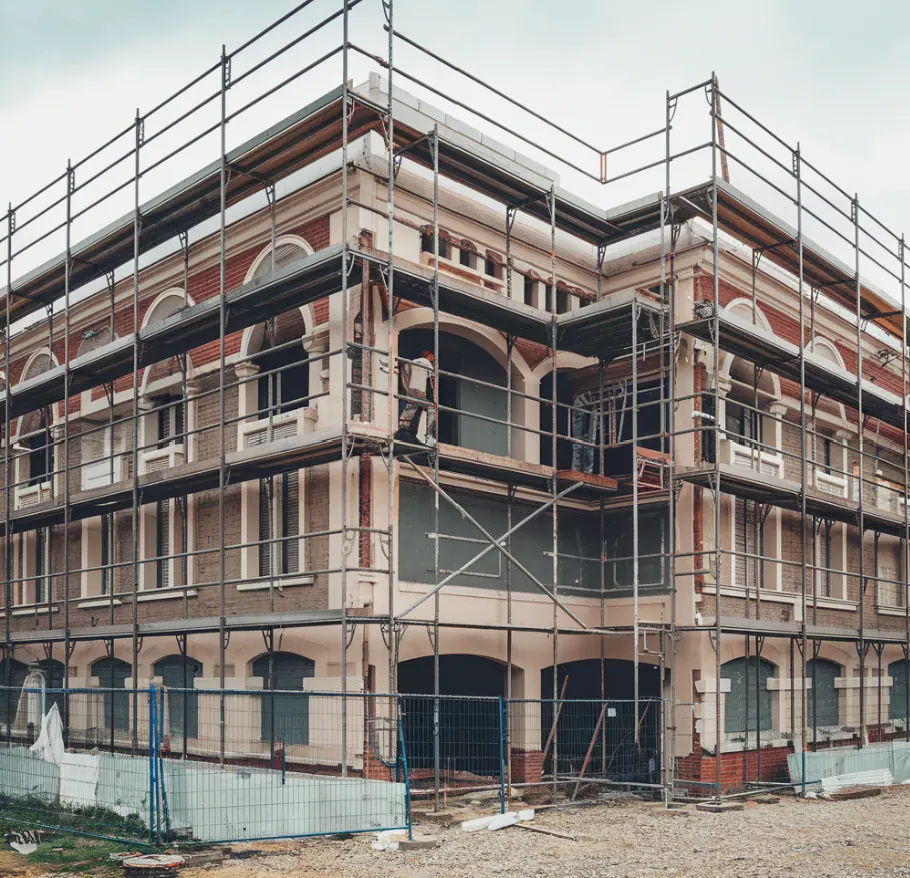
- Safety around the building: Scaffolding, safety netting and barricading protect residents, visitors and parked vehicles while work goes on overhead.
- Resident communication: Advance notices about access, noise, water supply and parking help residents plan around the work.
- Progress reporting and stage payments: Regular progress reports and payments linked to completed, inspected stages keep cost and progress aligned.
What DEPL offers a housing society on a structural repair project
DEPL Enterprise has been based in Mumbai since 1995 and has completed 1500+ projects for 500+ clients across residential, commercial and industrial work, with a Pan-India presence. Its commitment on every project is to quality, timeliness, safety and detailed reporting.
To start, request a quote or book a site visit. Sharing the building's age, photos of the problem areas and any structural audit report helps define the scope before the visit.
- Engineering-led repair: Structural repair is handled by DEPL's team of structural and civil engineers.
- Repair and finishing from one contractor: Structural repair, waterproofing, plaster, flooring and painting are all DEPL services, so the society does not have to coordinate several agencies.
- Detailed reporting: DEPL commits to detailed reporting on every project, which gives the managing committee clear information to share with members.
Typical stages of the work
- Condition assessment: The building is inspected and visible distress such as cracks, spalling, exposed steel and leakage is recorded. Where the society has a structural audit report, it defines which members need repair.
- Scope and quotation: Repairs are listed member by member with methods, materials and quantities, so the committee can compare quotations on the same basis.
- Site set-up: Scaffolding, safety netting and barricading are installed so that work at height is safe and residents and passers-by are protected.
- Removing damaged concrete: Loose and deteriorated concrete is broken out until sound concrete and the full length of corroded reinforcement are exposed.
- Treating the reinforcement: Rust is cleaned off, badly corroded bars are supplemented with new steel, and an anti-corrosion coating is applied.
- Rebuilding and strengthening: Sections are rebuilt with polymer-modified mortar or micro-concrete, and members that need extra capacity are jacketed.
- Waterproofing, plaster and painting: Terraces and walls are waterproofed, replastered and painted so that water does not reach the repaired structure again.
- Final inspection and handover: The completed work is inspected and documented before the scaffolding is removed and the site is handed back to the society.
The exact scope, method, tests and handover are agreed in DEPL's quotation for each project.
Frequently asked questions
Does DEPL Enterprise do structural repair for housing societies in Mumbai?
Yes. DEPL Enterprise Pvt. Ltd. is a Mumbai-based contractor that carries out structural repair for housing societies and other building owners. Its team of structural and civil engineers handles column and beam restoration, concrete and crack repair, foundation and masonry repair, and seismic retrofitting, and can take an older building through a complete overhaul. DEPL has worked in construction and finishing since 1995 and has a Pan-India presence.
What are the signs that a building needs structural repair?
The main signs are falling or spalling concrete, rusted or exposed steel bars, cracks running along columns and beams, hollow or bulging plaster, and dampness that returns every monsoon. In Mumbai's humid coastal climate these usually point to corrosion of the reinforcement inside the concrete. Cracks that widen or reappear after patching should be inspected by a structural engineer before any repair is specified.
Can an old building be repaired instead of redeveloped?
Often, yes, provided its structural frame is still repairable. An ageing building can be returned to sound condition through structural repair followed by waterproofing, plaster and painting, and DEPL carries out this kind of complete overhaul to extend a building's life and improve safety. A structural engineer should assess the building first, because some buildings are too deteriorated to repair. The choice between repair and redevelopment rests with the society.
What is the difference between structural repair and waterproofing or painting?
Structural repair restores the strength of the load-bearing parts of a building, such as columns, beams, slabs and foundations, while waterproofing and painting protect surfaces from water and weather. Painting over a cracked or corroded member hides the problem without fixing it. In a typical society repair project, structural repair comes first, followed by waterproofing, plaster and painting. DEPL offers all of these, so one contractor can handle the full sequence.
What is seismic retrofitting of a building?
Seismic retrofitting is the strengthening of an existing building so that it performs better in an earthquake. Common methods include jacketing columns and beams with extra reinforcement and concrete, adding shear walls or steel bracing, and improving the connections between structural members. The right method depends on a structural engineer's analysis of the building. Seismic retrofitting is among the structural services DEPL offers.
How do I get a quote for structural repair from DEPL?
Call +91 98216 42418 or +91 98214 46505, or email info@deplenterprise.com, to request a quote or book a site visit. Share the building's age, photos of the problem areas and, if available, the structural audit report, so the scope can be understood before the visit. DEPL's office is at E-601, Lilac Garden Hsg Society, Ganesh Chowk, Kandivali West, Mumbai – 400067, Maharashtra, India.