Residents stay in the building during work
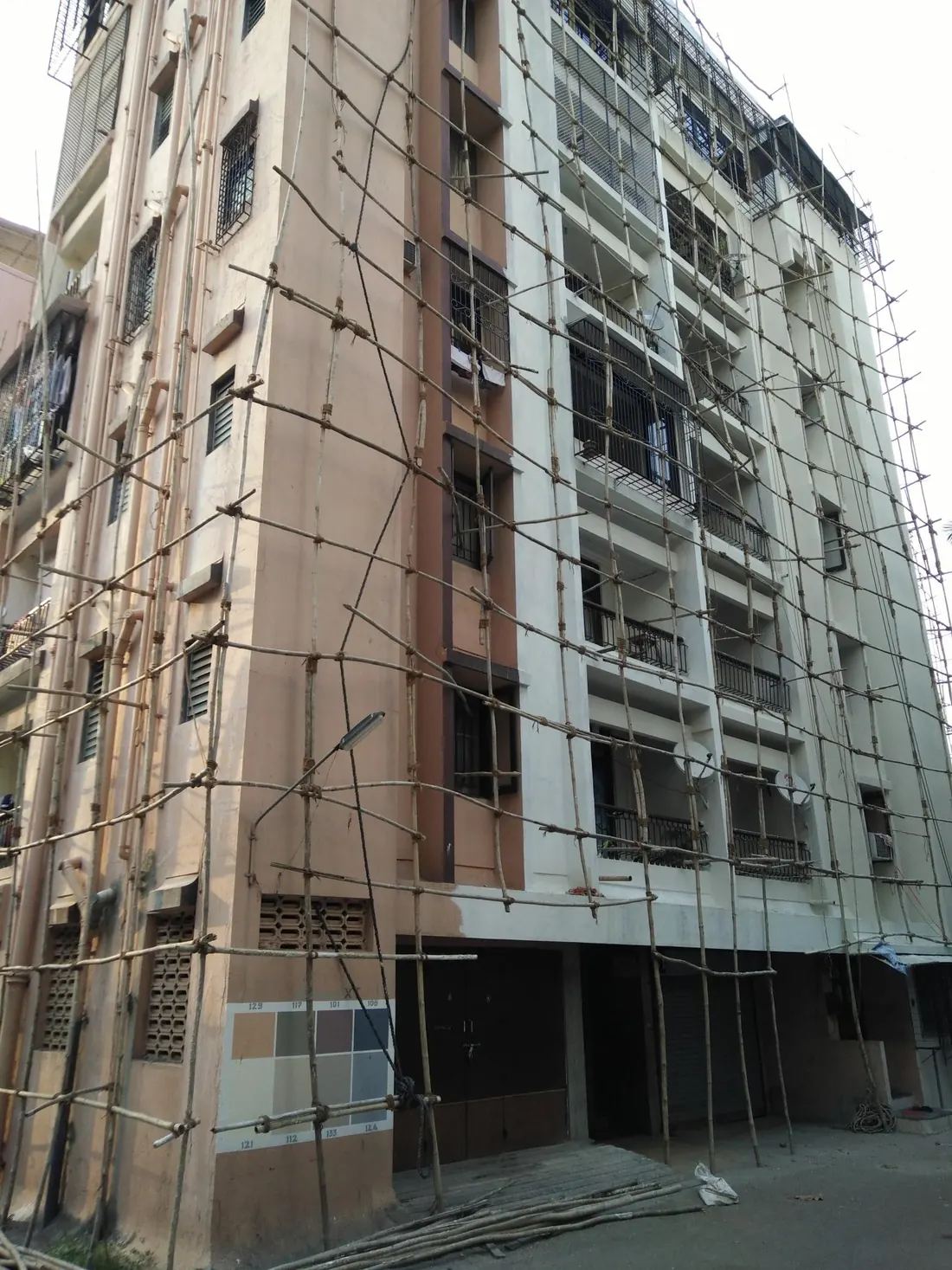
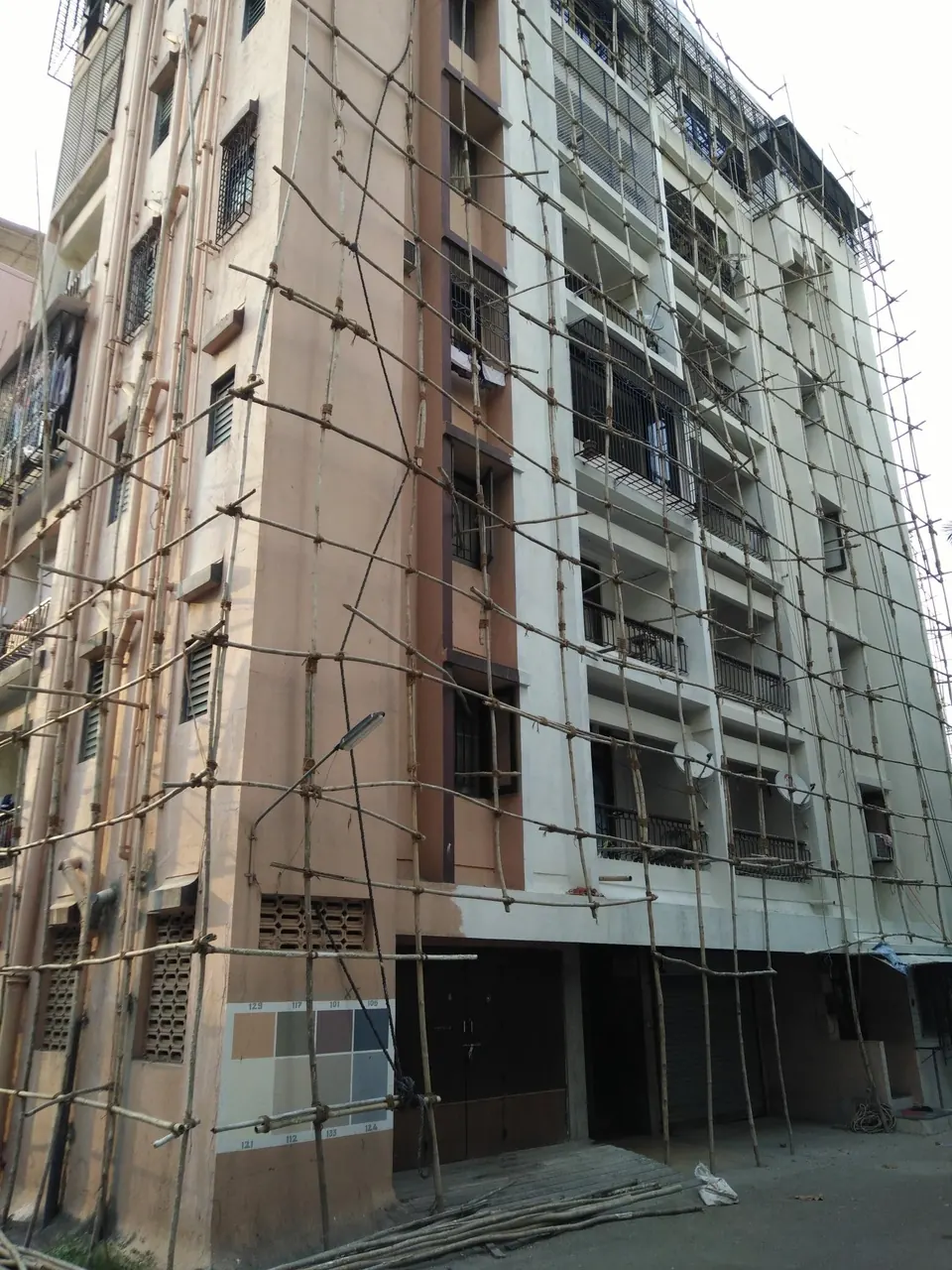
In most society repair projects, families keep living in the building, so noise, dust, water shutdowns and access to flats have to be planned. Facade repair and repainting are done from scaffolding outside the building and terrace waterproofing on the roof, so most of the work stays outside the flats, and phasing it wing by wing or floor by floor keeps the building in use. On interior painting, including common areas, DEPL uses low-odour paints and works around occupants' schedules to limit disruption.
Safety around scaffolding and work at height
Facade repair and painting involve work at height above balconies, parking areas and entrances that residents use every day. Safety netting on scaffolding is commonly used to catch falling debris, and barricading keeps residents, children and passers-by away from work zones. DEPL commits to safety on every project. In its published IICC Yashobhoomi case study, teams worked from boom lifts with regular safety briefings, mandatory protective gear and supervisors on site day and night, and the work was completed with zero safety incidents.
Quotations that can be compared like-for-like
Society quotations often differ because they price different scopes, not because of lower rates. Quotations can only be compared when each lists the same items, quantities, repair methods, materials, paint or waterproofing system and number of coats, and says whether scaffolding and netting are included. A structural audit report or a consultant's bill of quantities gives every bidder the same basis. Committees can book a DEPL site visit so that the building is surveyed before a quotation is prepared.
Work planned around the monsoon
Most leaks in Mumbai show up during the monsoon, but exterior painting, sealing and many waterproofing systems need dry surfaces to bond and cure. Societies therefore often record leaks during the rains, complete the site survey, quotations and members' approval before the monsoon ends, and carry out external work in the dry months, roughly October to May. Because DEPL offers structural repair, waterproofing and painting, the whole job can be planned as a single sequence, with external work timed for the dry months.
Transparency and reporting to members
A managing committee spends members' money and has to explain progress, variations and payments to them. Progress updates, photographs, measurements of completed work and records of hidden defects found during repair make that easier, so it helps to agree at the start how progress will be reported. DEPL commits to detailed reporting on every project, alongside quality, timeliness and safety, and its mission includes building lasting client relationships through transparency and reliability.
A single contractor for repair, waterproofing and repainting
Repainting a building with cracked columns or a leaking terrace hides the problem without fixing it, and when several vendors share the work it is harder to pin down why a leak has returned. The usual sequence is structural repair first, then waterproofing, plaster and painting. DEPL offers all of these, along with plumbing and paver block work, so a society can give the full sequence to a single contractor and responsibility for how the stages fit together stays with that contractor.