
Who this is for:Construction companies & developersHousing societies
What DEPL's building finishing services cover
Building finishing is the stage that makes a structurally complete or stripped-out building ready to use. DEPL Enterprise groups the following finishing trades under its building finishing service, so a developer, PMC or owner can award them together.
- Tiling: Floor tiling in ceramic, porcelain, marble and mosaic; wall tiling for bathrooms, kitchens and feature walls.
- Plaster work: Interior plastering in smooth, textured and decorative finishes; exterior plastering in weather-resistant and insulated finishes.
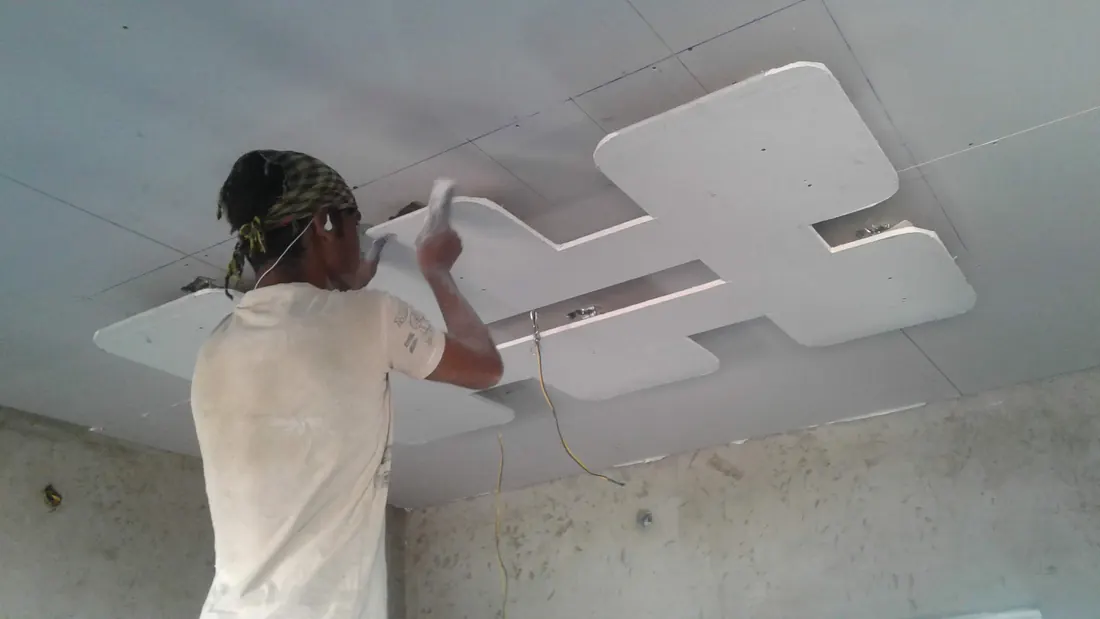
- POP works: Plaster of Paris (POP) ceiling design and installation, and POP wall decoration and moulding.
- Texture work: Interior textures such as orange peel, knockdown and stomp ceilings; exterior textures such as stucco, roughcast and pebbledash.
- Furniture works: Custom furniture, woodwork and carpentry, modular furniture, kitchen cabinets, wardrobes, office furniture and upholstery.
- Other civil works: Waterproofing and damp proofing, insulation and soundproofing, fire-retardant coatings, security systems, and electrical and plumbing fixtures.
Common finishing problems and when to call a finishing contractor
Finishing work is needed when a new building is readied for handover, when flats, offices or common areas are renovated, and when existing finishes fail. Many finishing defects trace back to sequencing and base work: concealed electrical and plumbing lines, plaster and wet-area waterproofing must be complete and sound before tiles, POP and paint go on, or the problems below appear after handover.
- Hollow-sounding or cracked tiles: Usually caused by a poor bed of adhesive or mortar, an uneven base or missing movement joints.
- Cracked or uneven plaster: Shrinkage cracks, poor bonding to the masonry or uneven coat thickness show through paint and texture.
- Stained or sagging POP ceilings: POP weakens when wet, so leaks from the floor above or from bathrooms cause stains, sagging and failure.
- Damp walls behind finishes: Seepage from wet areas or the facade damages plaster, paint and woodwork; the source of the water has to be fixed first.
- Too many agencies on site: Separate contractors for tiling, wall finishes, ceilings and carpentry mean more hand-offs, gaps in responsibility and slower snagging.
Floor and wall tiling: materials and methods
DEPL lays floor tiles in ceramic, porcelain, marble and mosaic, and wall tiles for bathrooms, kitchens and feature walls.
A durable tiled floor depends on what lies beneath it: a level, sound base, the right tile adhesive or mortar for the tile and substrate, even joints and proper grouting. In bathrooms and other wet areas, waterproofing is done before tiling and floors are sloped towards the drain. Porcelain is dense, hard-wearing and absorbs little water, so it suits high-traffic and wet areas; ceramic is widely used on walls; marble is porous and sensitive to acids, so it needs sealing, polishing and care against stains; and mosaic suits detailing and curved surfaces.
Plaster and POP work: what each is for and where it is used
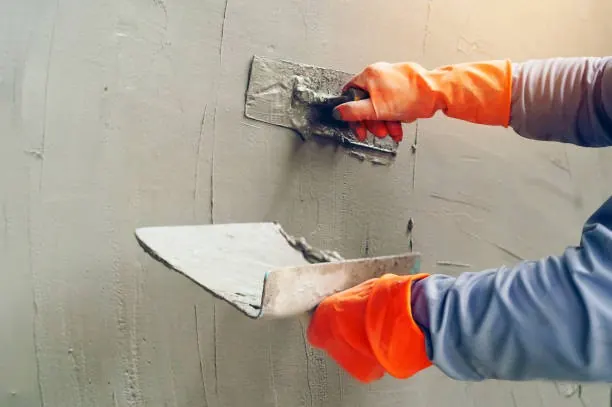
Cement plaster is the levelling and protective coat applied over brick or block masonry and concrete, inside and outside. It makes surfaces true and protects the masonry, and its quality largely decides how well paint or texture will finish. DEPL carries out interior plastering in smooth, textured and decorative finishes, and exterior plastering in weather-resistant and insulated finishes.
Plaster of Paris (POP) is a gypsum-based material used indoors for false ceilings, cornices, coves and decorative mouldings, and as a thin punning coat that smooths walls before painting. DEPL designs and installs POP ceilings and carries out POP wall decoration and moulding. Because POP weakens when wet, it is generally kept to dry interior areas.
Interior and exterior texture finishes: types and uses
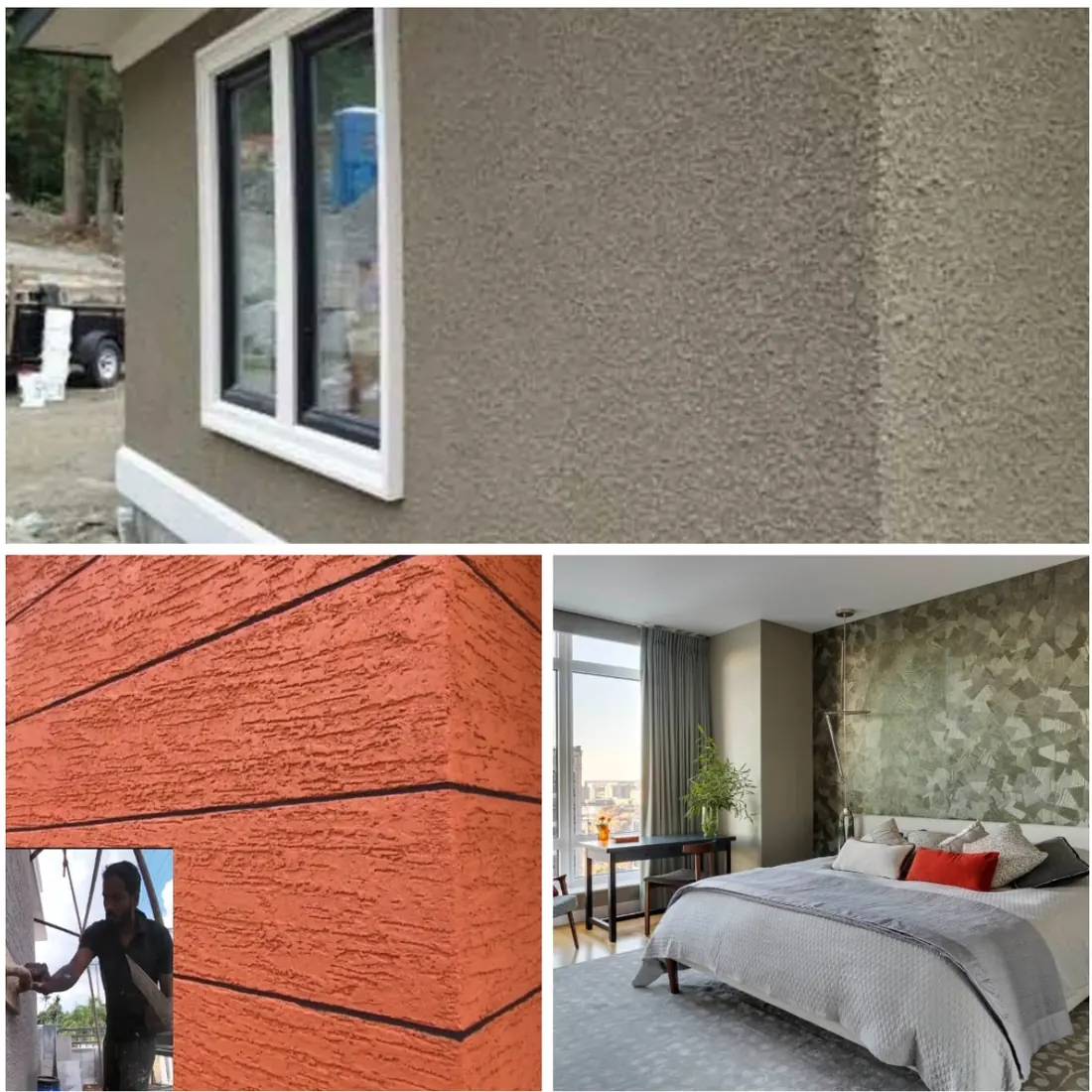
Texture finishes add pattern and depth to walls and ceilings and can disguise minor surface irregularities. DEPL offers the following interior and exterior textures.
- Orange peel (interior): A fine, dimpled texture resembling the skin of an orange, usually sprayed onto walls or ceilings.
- Knockdown (interior): Texture compound applied in spatters and then flattened with a trowel, giving a mottled, low-relief pattern.
- Stomp ceiling (interior): Compound applied to a ceiling and pressed with a stomp brush to create a raised, irregular pattern.
- Stucco (exterior): A cement- or lime-based render applied in layers and finished in a range of textures.
- Roughcast (exterior): Render mixed with small stones or gravel and thrown onto the wall for a rough, hard-wearing finish.
- Pebbledash (exterior): Render onto which small pebbles are thrown and pressed while it is still wet, leaving them exposed.
Furniture, carpentry and allied civil works
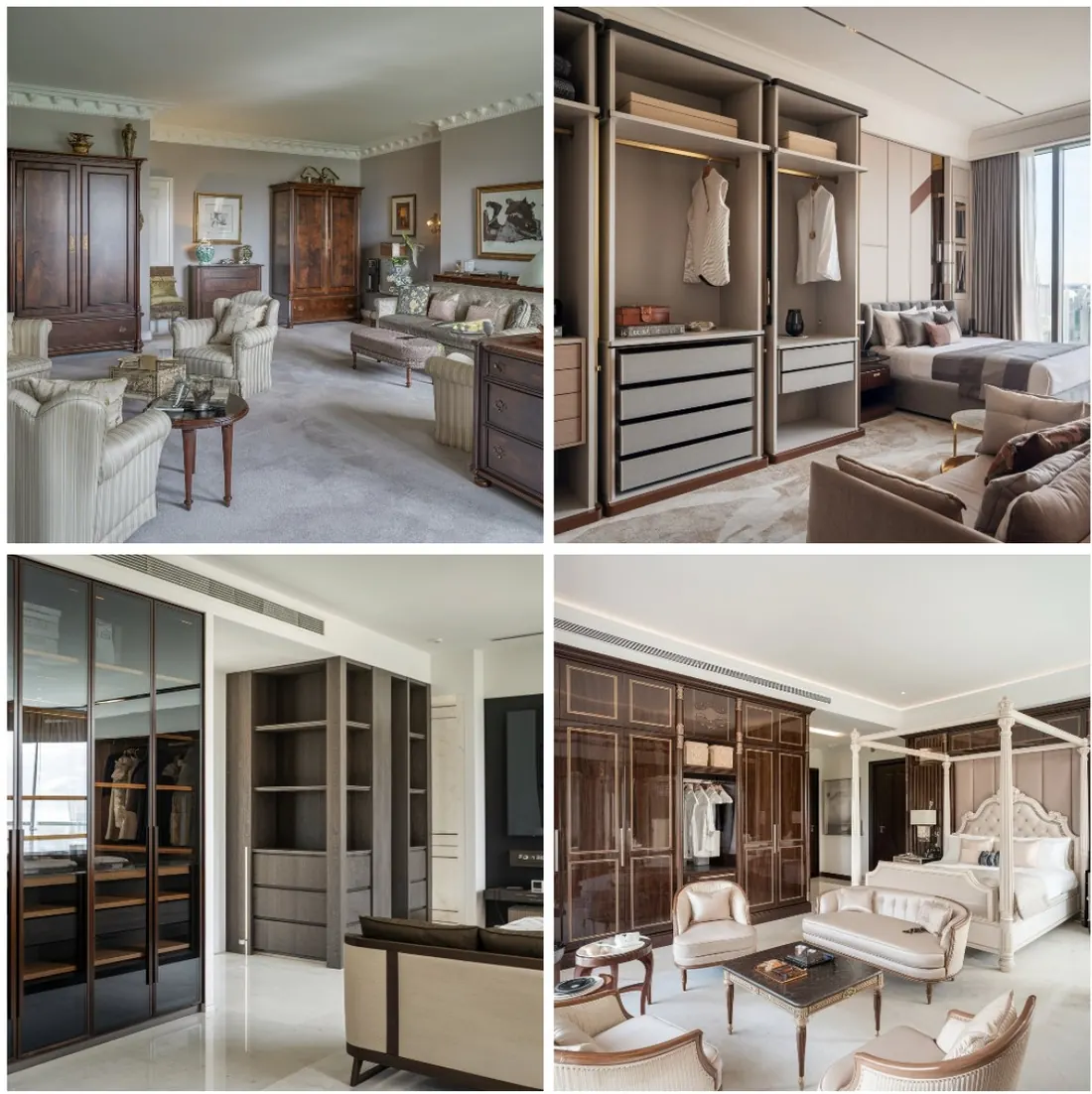
DEPL's furniture works range from front doors and windows to furnishing a complete house, for both developers and flat owners. They cover custom furniture design and manufacturing, woodworking and carpentry, upholstery and reupholstery, modular furniture installation, kitchen cabinet and wardrobe installation, and office furniture installation.
Allied civil works under DEPL's building finishing service include waterproofing and damp proofing, insulation and soundproofing, fire-retardant coatings, security systems, and installation and repair of electrical and plumbing fixtures. Waterproofing, plumbing and electrical works are also offered as separate DEPL services.
Why choose DEPL as your building finishing contractor
DEPL Enterprise has worked on residential, commercial and industrial projects since 1995 and has completed 1500+ projects for 500+ clients across its services. It works with developers, PMCs, interior designers and architects across India, and offers the practical advantages below on finishing work.
- Fewer agencies to manage: Tiling, plaster, POP, texture, carpentry and allied civil works from a single contractor, with a single point of contact for the project team.
- Trades in the right order: Concealed services, plaster and wet-area waterproofing are planned before tiles, POP and final finishes, which reduces rework.
- Related services available: Waterproofing, plumbing, electrical works, painting and glazing are also DEPL services, so finishing can be coordinated with them.
- Detailed reporting: A commitment to quality, timeliness, safety and detailed reporting on every project, so developers and PMCs can track progress.
Typical stages of the work
- Site visit and measurement: Survey walls, floors and ceilings, check their condition and take measurements.
- Scope and specifications: Agree tile types, plaster and texture finishes, POP ceiling designs and furniture specifications with the client, architect or interior designer.
- Quote and sequencing: Prepare a quote and plan the order of trades: concealed services, plaster and wet-area waterproofing come before tiling, POP and painting.
- Base work: Complete concealed electrical and plumbing lines and plaster, then waterproof wet areas, so surfaces are true and sound before finishing.
- Finishing trades: Lay tiles, install POP ceilings and mouldings, apply texture finishes, and fit carpentry and furniture.
- Snagging and handover: Inspect levels, joints, alignment and finishes, rectify defects, clean the site and hand over.
The exact scope, method, tests and handover are agreed in DEPL's quotation for each project.
Frequently asked questions
What does building finishing work include?
Building finishing work covers the trades that turn a structurally complete building into a usable space: flooring and wall tiling, plaster, POP ceilings and mouldings, texture and paint finishes, carpentry and fixtures. DEPL's building finishing services include floor and wall tiling, interior and exterior plaster, POP works, texture work, furniture works and allied civil works such as waterproofing, damp proofing and electrical and plumbing fixtures.
What is the difference between POP and cement plaster?
Cement plaster is a sand-and-cement coat that levels and protects masonry and concrete, inside and outside, while Plaster of Paris (POP) is a gypsum-based material used indoors for false ceilings, mouldings and a smooth punning coat over plaster before painting. POP weakens when wet, so it is kept out of exteriors and wet areas. DEPL handles both: interior and exterior plastering, and POP ceilings, wall decoration and moulding.
Which types of tiles does DEPL lay?
DEPL lays ceramic, porcelain, marble and mosaic tiles on floors, and wall tiles in bathrooms, kitchens and on feature walls. The right tile depends on use: porcelain is dense and absorbs very little water, so it suits high-traffic and wet areas; ceramic is common on walls; marble gives a natural-stone finish but needs sealing, polishing and care against stains and acids; and mosaic suits borders, detailing and curved surfaces.
What texture finishes are available for interior and exterior walls?
DEPL offers orange peel, knockdown and stomp ceiling textures for interiors, and stucco, roughcast and pebbledash for exteriors. Interior textures are applied over plaster or POP and then painted, adding pattern while hiding minor surface flaws. Exterior textures are render-based finishes that give facades a hard-wearing, textured surface. A sample panel on site helps confirm the pattern before the full area is done.
Can a single contractor handle tiling, plaster, POP and carpentry together?
Yes. DEPL provides tiling, plaster, POP, texture finishes, furniture and carpentry, and allied civil works under its building finishing service. Using a single contractor for these trades means fewer hand-offs between agencies, clear responsibility for sequencing and quality, and a single point of contact for progress reporting, which simplifies coordination for developers, PMCs, architects and society committees.
Does DEPL take up finishing work for developers, architects and interior designers?
Yes. DEPL works on residential, commercial and industrial projects with developers, PMCs, interior designers and architects, and has completed 100+ building finishing projects. Its client list across services includes developers such as Lodha, Oberoi Realty and K Raheja Corp. To get a quote, book a site visit and share drawings and a scope of work, so the tile, finish and carpentry specifications can be priced correctly.